We independently review every product. If you buy through a link here, we may earn a commission at no extra cost to you. Full disclosure.

The Tech Everyone's Watching for 2026-2027

Ten launches people are already searching for, none of them shipping yet. Every entry is split into what's actually confirmed, what's credibly reported, what's rumor, and what's our own read on how it plays out, so you can tell the difference. Sources linked throughout.

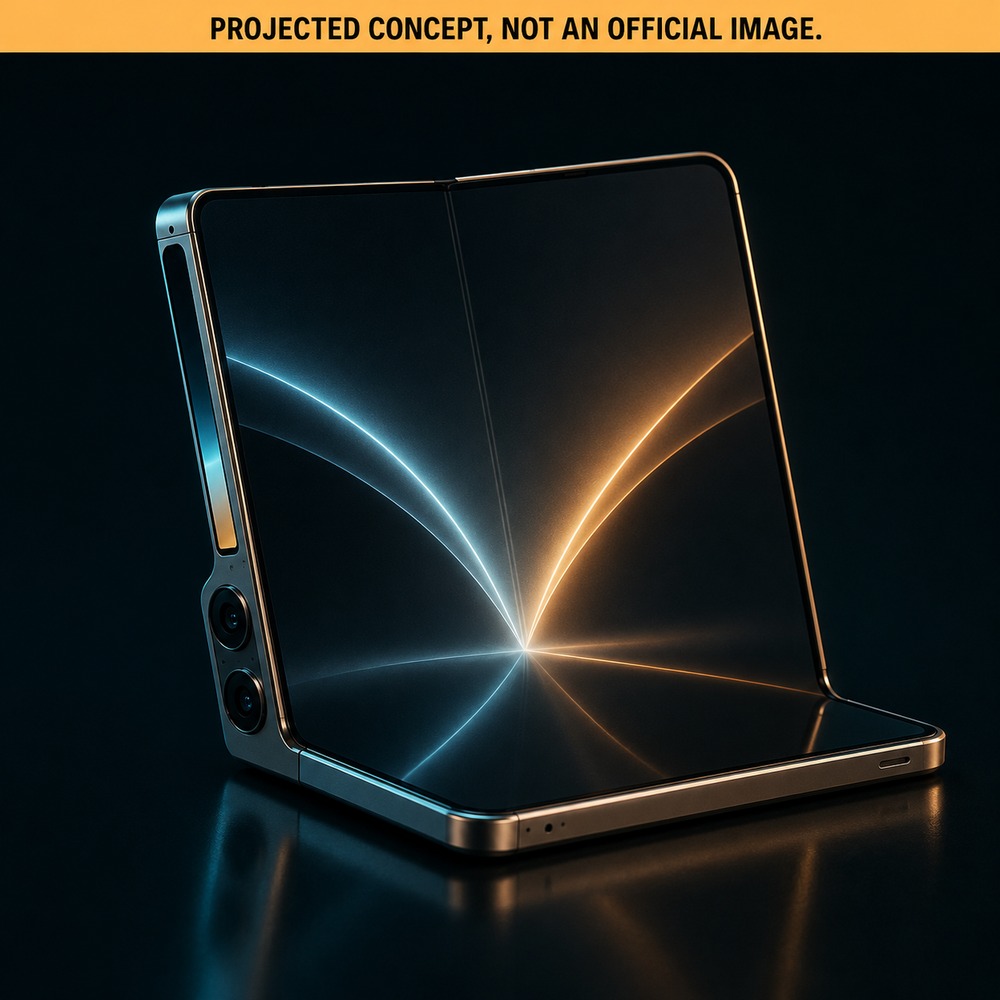
Concept art, not an official photo: iPhone Duo, Apple's First Foldable iPhone Concept art, not an official photo
#1
Smartphones

iPhone Duo, Apple's First Foldable iPhone

Apple doesn't need to lead unit share to matter here. Forcing mainstream developers to treat adaptive phone/tablet layouts as a first-class iOS requirement improves the software ecosystem for every foldable vendor, and Apple's purchasing scale should accelerate creaseless-display and hinge manufacturing industry-wide.

Known
  • Officially named iPhone Duo: 5.4-inch outer display, 7.6-inch inner display, both 120Hz OLED. A20 Pro chip, 12GB RAM, IP68, titanium frame with a 100+ component hinge.
  • Starts at $1,999 (256GB), up to $3,199 (2TB). Preorders open October 16, ships October 23 in 70+ countries.
  • Dual 48MP rear cameras (main + ultra-wide), no telephoto lens. Touch ID in the side button, no Face ID.
Credibly reported
  • Bloomberg's Mark Gurman reports a larger "iPhone Duo Max" is likely in Apple's pipeline, with no date attached.
  • Gurman also reports the third-generation Duo is expected to add Face ID and a telephoto lens, both absent from this first model.
Our projection

Early hands-on impressions (Engadget, Tom's Guide) are more positive than skeptical, and Wall Street's main worry is margin, not demand -- this reads like the start of a real product line, not a one-off halo release.

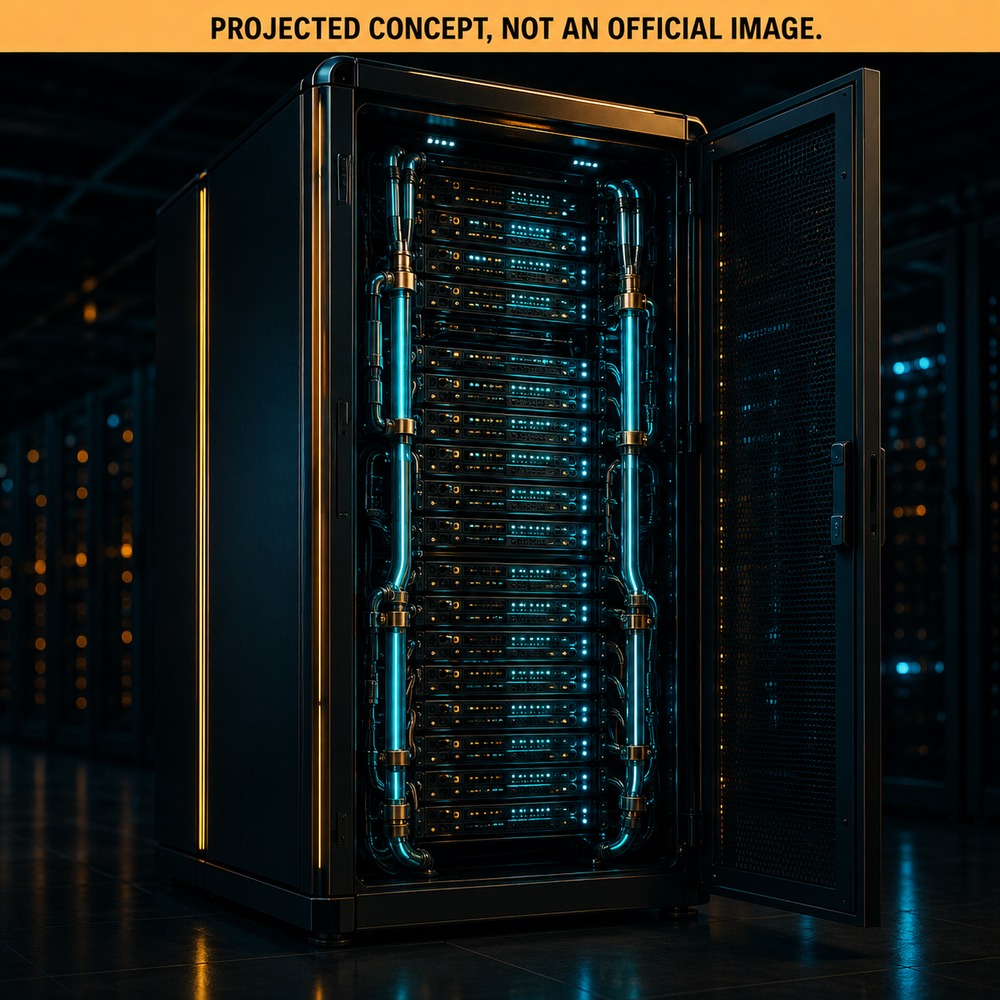
Concept art, not an official photo: NVIDIA Vera Rubin AI Platform Concept art, not an official photo
#2
AI Infrastructure

NVIDIA Vera Rubin AI Platform

Rubin's real disruption is economic, not just benchmark bragging rights. Longer-context AI agents repeatedly call models, tools, and memory, so tokens-per-watt and network efficiency matter as much as raw compute. If NVIDIA's claims survive production workloads, running enterprise agents continuously could finally become affordable.

Known
  • Rubin silicon and the Vera Rubin platform are official and in production; rollout begins H2 2026.
  • Confirmed: 336 billion transistors, 224 SMs, 896 Tensor Cores, 288 GB HBM4, 22 TB/s HBM bandwidth per GPU.
Rumor / leak
  • Reports say NVIDIA has tested lower-memory Rubin Ultra configurations (192-256 GB) due to HBM supply pressure -- unconfirmed.
  • The larger Kyber Rubin Ultra rack may slip to 2028 over midplane problems. This does NOT mean 2026 Vera Rubin NVL72 is delayed.
Our projection

Rubin NVL72 should ship on schedule to hyperscalers, but usable capacity stays supply- and power-constrained through 2027. The near-term effect is lower cost per reasoning token for well-optimized customers, not an immediate retail AI price collapse.

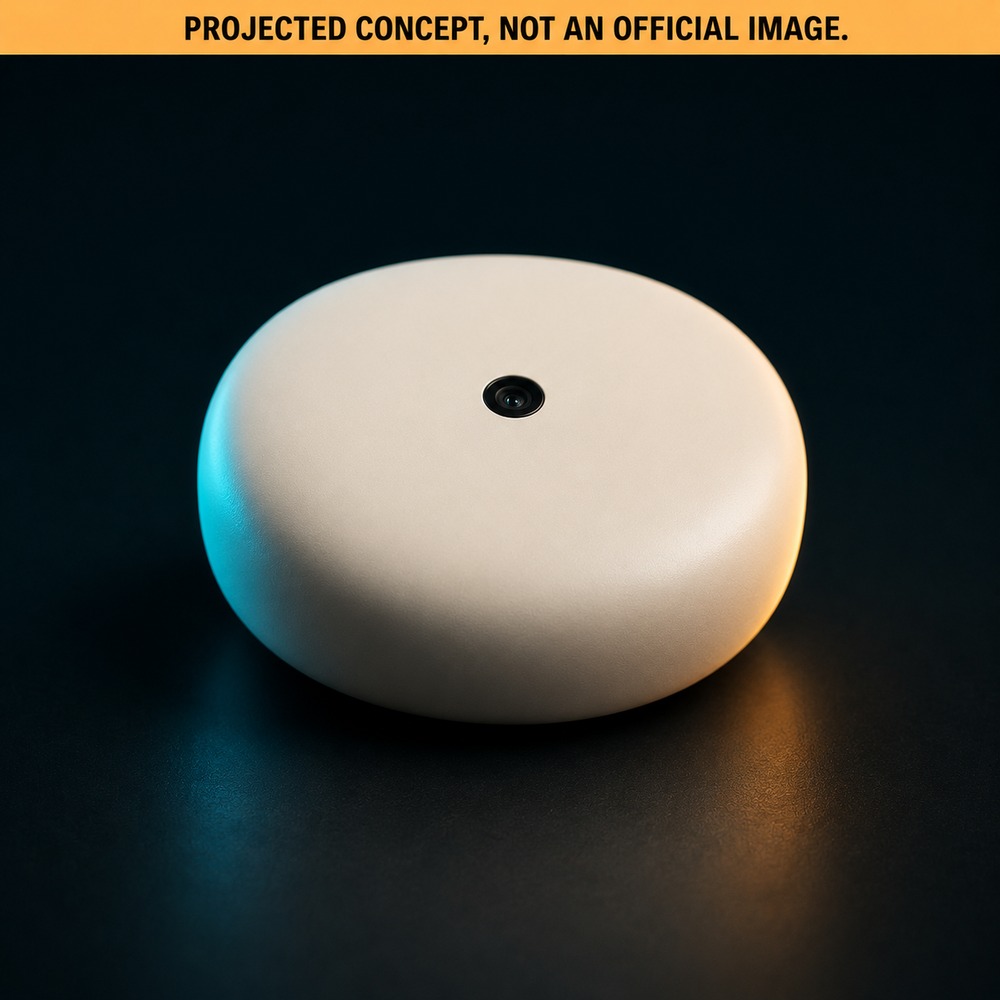
Concept art, not an official photo: OpenAI + Jony Ive Screenless AI Companion Concept art, not an official photo
#3
AI Hardware

OpenAI + Jony Ive Screenless AI Companion

This is the clearest test yet of whether AI deserves hardware built around persistent context instead of apps and screens. Success could shift interaction from open-app-issue-command to ambient, proactive assistance. Failure modes are just as real: privacy, always-on sensing, hallucinated actions, and no display for verification. Humane's AI Pin already showed how unforgiving this category is.

Known
  • OpenAI acquired io, the hardware startup tied to Jony Ive, for roughly $6.5 billion, and has acknowledged a family of devices in development.
  • No official industrial design, dimensions, sensors, battery, processor, price, or ship date has been published.
Credibly reported
  • Bloomberg-derived reporting describes a screenless, battery-powered home companion with a camera, environmental sensing, and moving mechanical elements.
  • Court filings reportedly say it won't ship before the end of February 2027.
  • More recent reporting describes a hockey-puck-sized device priced above $300.
Rumor / leak
  • A $300-$400 price band is not confirmed.
  • Claims it will read email, act proactively, or control a smart-home stack may describe intended capability, not launch-day functionality.
Our projection

Most likely: a limited 2027 launch, usage-linked pricing, positioned as a third device rather than a phone replacement. Adoption depends less on design than on latency, interruption handling, and whether people trust an always-on camera in private rooms.

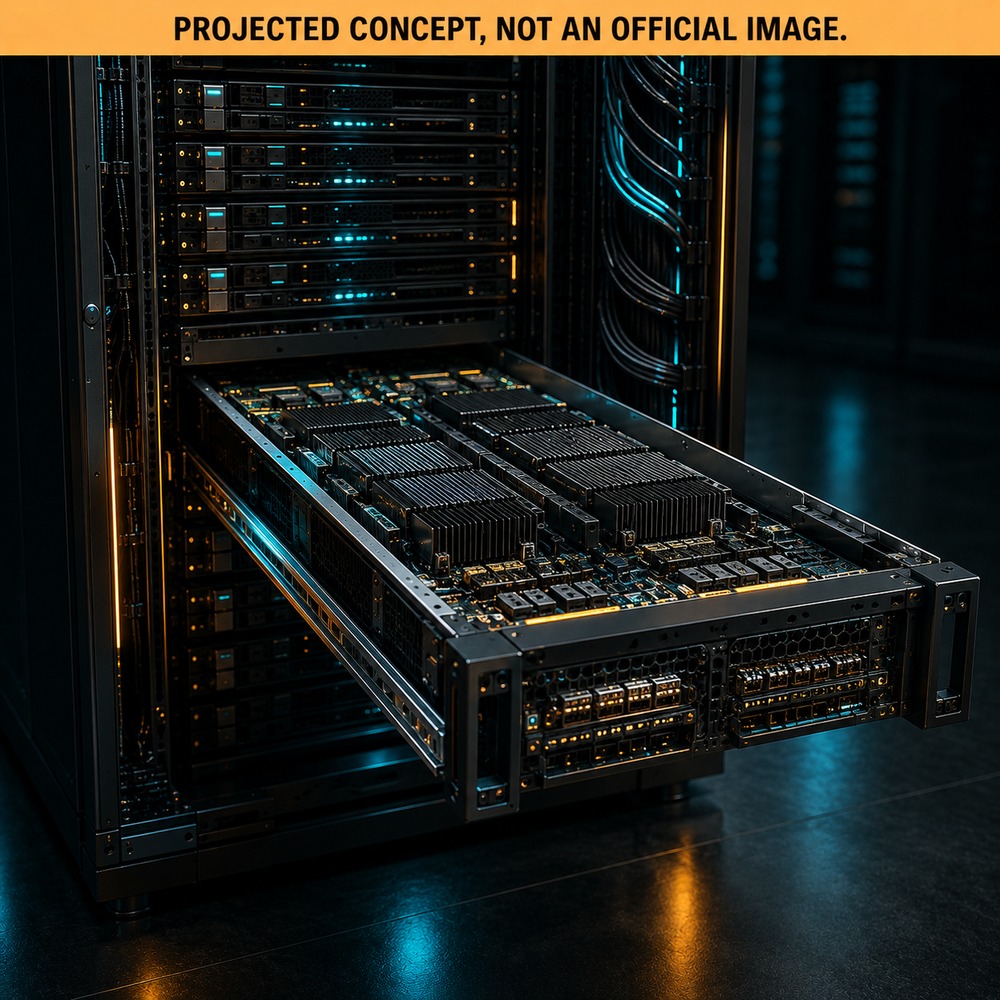
Concept art, not an official photo: AMD Helios / Instinct MI455X Concept art, not an official photo
#4
AI Infrastructure

AMD Helios / Instinct MI455X

The differentiator is openness. Buyers wary of CUDA and proprietary rack lock-in get a technically credible high-memory alternative, and large HBM capacity could reduce model sharding for memory-heavy inference. The risk is software maturity -- NVIDIA's real moat is CUDA tooling and operational experience, not just GPU specs.

Known
  • AMD officially specifies 432 GB HBM4 and 23.3 TB/s bandwidth per MI455X, in a 72-GPU Helios reference design, targeting H2 2026 volume deployment.
  • Built on open standards -- OCP, UALink, UEC -- with ROCm support for PyTorch, TensorFlow, JAX, vLLM, Triton.
Credibly reported
  • Analyst commentary expects first rack shipments around Q3 and a larger Q4 ramp -- financial projections, not purchase disclosures.
Our projection

Helios wins customers who value memory capacity and negotiating leverage against NVIDIA, but is unlikely to displace CUDA-heavy clusters quickly. Watch ROCm issue rates and named hyperscaler deployments before accepting any ‘Rubin killer’ narrative.

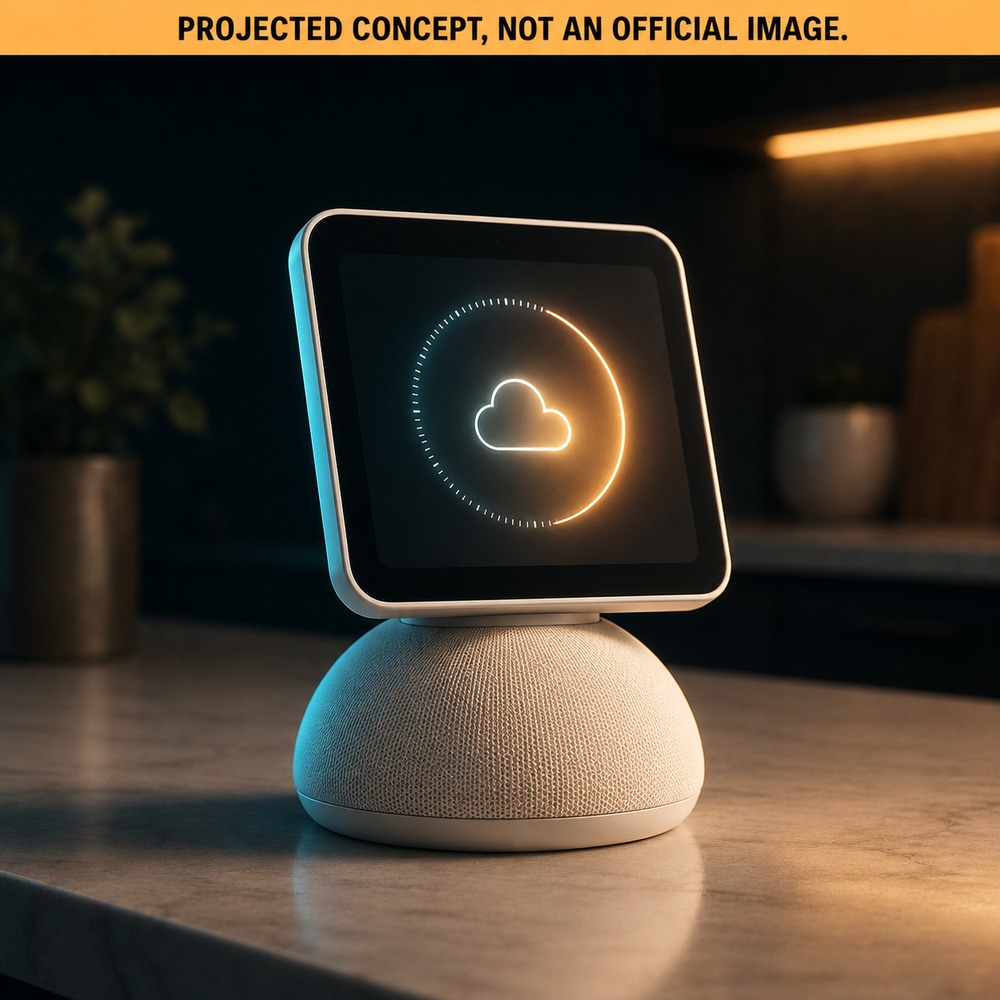
Concept art, not an official photo: Apple HomeView, Apple's First Smart Home Hub Concept art, not an official photo
#5
Smart Home

Apple HomeView, Apple's First Smart Home Hub

Apple is years behind Amazon and Google in smart displays, but it's the first company to pair one with a dedicated AI assistant, face recognition for up to six household members, and a hardware partner (LG, plus Schneider Electric for energy devices) building the accessories around it. Whether that actually makes a smart home easier to live with, instead of just another screen in the kitchen, depends entirely on whether Siri AI performs outside a keynote demo.

Known
  • Officially named HomeView. Two versions: a countertop model with a speaker base (Silver, Starlight, Rose Pink, Space Gray) and a wall-mounted model (Silver, Space Gray only). Both run Apple's A18 chip and cost $299; the wall mount itself is a separate $59.95 accessory.
  • 7-inch Liquid Retina touchscreen, 500 nits peak brightness, dims to 0.3 nits for nightstand use. Countertop model adds two full-range drivers, a down-firing woofer, and two passive radiators.
  • Recognizes up to six people by face and switches to that person's own Home Screen, apps, and widgets. Personal notifications and calendar data come from a paired iPhone or iPad with Apple Intelligence.
  • Siri AI is the headline feature: broader world knowledge, onscreen awareness, and (with a compatible iPhone/iPad) personal context from apps like Messages and Calendar. Apple says camera and microphone data is isolated via Secure Enclave, and Siri requests run on-device or through Private Cloud Compute.
  • Smart home dashboard for lights, thermostats, locks, and blinds, plus up to nine camera feeds at once. Works with Matter accessories and the new Apple Home Collection, built with LG and Schneider Electric.
  • Preorders opened October 13, ships November 13 in the US, UK, and several other markets. Not launching in the EU yet, because Siri AI isn't currently available on iOS there.
Credibly reported
  • Per Bloomberg's Mark Gurman, HomeView ships without an App Store. A limited set of Apple's own apps is built in; third-party accessories are controlled through Matter/Thread, the Home app, and Siri rather than downloadable software. No timeline has been reported for adding one later.
  • HomePod mini 2 launches alongside it at $149 with Apple's S10 chip, built to support Siri AI once a later software update turns it on.
  • Apple TV's remote is reportedly getting a built-in speaker, and Apple TV itself a microphone, so Siri requests can be made directly in the living room -- a sign Siri AI is rolling out across more devices than just HomeView.
Our projection

The hardware and the $299 price look right on paper, but Apple is entering a category Amazon's Echo Show and Google's Nest Hub have had a decade to refine, without an App Store on day one. The decisive factor won't be the screen, it'll be whether Siri AI's onscreen-awareness and personal-context promises hold up in daily use the way they didn't the first time Apple tried to ship a more capable Siri.

Concept art, not an official photo: Amazon Leo Satellite Broadband Concept art, not an official photo
#6
Satellite Broadband

Amazon Leo Satellite Broadband

Starlink already proved LEO broadband is commercially viable. Amazon's angle is AWS integration: remote mines, farms, ships, and factories can connect straight into cloud networks and edge workloads. Competition should push terminal prices down, but capital intensity and spectrum coordination are real constraints.

Known
  • Production satellites are in orbit with enterprise preview customers and three official terminal classes.
  • Official ceilings: Nano 100 Mbps down, Pro 400 Mbps down, Ultra 1 Gbps down / 400 Mbps up.
  • The FCC relaxed a deployment deadline but temporarily reduced spectral priority for later-launched satellites.
Rumor / leak
  • Consumer pricing, data caps, real-world latency under congestion, and exact regional launch dates are all still unknown.
Our projection

Initial advantage is enterprise/AWS private networking, not mass residential price competition. Consumer rollout will likely be geographically uneven until satellite density rises.

Concept art, not an official photo: Boston Dynamics Atlas Customer Expansion Concept art, not an official photo
#7
Robotics

Boston Dynamics Atlas Customer Expansion

Atlas matters because Boston Dynamics published the kind of operational spec sheet humanoid-robot demos usually avoid. If early deployments show real uptime and safe human proximity, the industry could shift from fixed automation cells to general machines working in existing human spaces -- but price, maintenance cost, and true multi-shift battery life are still unresolved.

Known
  • 56 degrees of freedom, 50 kg instantaneous payload, 4-hour standard battery with ~3-minute autonomous swap, IP67.
  • All 2026 deployments are committed to Hyundai and Google DeepMind; additional customers planned for early 2027.
  • The public CES demo was remotely piloted for the event -- commercial tasks are intended to run autonomously.
Rumor / leak
  • No selling price has been published. Estimates of $130,000-$320,000 are analyst/blog speculation.
  • Claims of 30,000 Atlas units annually by 2028 often blur Boston Dynamics' own output with Hyundai's broader factory capacity.
Our projection

Expect controlled industrial pilots, not mass ordering, through 2027. The real scorecard is autonomous intervention rate and uptime, not a flashy dexterity demo.

Concept art, not an official photo: Intel Nova Lake / Core Ultra 400 Concept art, not an official photo
#8
Desktop CPUs

Intel Nova Lake / Core Ultra 400

Nova Lake is Intel's attempt to attack AMD from two directions at once: many-core productivity performance and large-cache gaming performance. If the rumored cache design works, AMD's X3D line finally faces a direct competitor -- but a new required socket and high platform power could still make AMD the simpler purchase.

Known
  • Intel has confirmed Nova Lake as a future client architecture; most consumer SKU details remain unannounced.
Credibly reported
  • Earlier roadmap commentary pointed to H2 2026; newer leak reporting suggests the commercial rollout centers on 2027.
Rumor / leak
  • “Core Ultra 400,” LGA-1954, a 52-core dual-tile flagship, and up to 288 MB of cache are leak-derived, not confirmed.
  • A leaked staged roadmap suggests mainstream parts arrive before the 52-core flagship, which could slip to late 2027.
  • Leaked board power-delivery figures imply roughly 474W of design reserve on dual-tile parts -- not a confirmed retail TDP.
Our projection

Expect a staggered family, not one launch day. Treat every exact core/cache/power figure as provisional until Intel publishes ARK specs and independent reviews land.

Concept art, not an official photo: Tesla Cybercab Commercial Ramp Concept art, not an official photo
#9
Autonomous Vehicles

Tesla Cybercab Commercial Ramp

If deployed without onboard safety drivers at attractive cost per mile, Cybercab could compress ride-hailing labor economics and make car ownership less of a default in dense markets. Tesla's manufacturing scale could matter more than being first -- Waymo already runs driverless service. The bottlenecks are regulatory approval and safety evidence, not factory output.

Known
  • Tesla began pilot Cybercab production and runs Robotaxi service with a mixed fleet in several U.S. metros.
  • Reporting on Tesla's Q2 shareholder letter says Tesla no longer expects volume production in 2026, citing battery/4680 scaling constraints.
  • Nevada approved only 10 of 5,000 requested robotaxis and required human supervision; no federal steering-wheel-free exemption had been filed as of August 14.
Rumor / leak
  • Sub-$30,000 cost, two million annual units, and fully unsupervised camera-only autonomy are targets or executive claims, not demonstrated fleet economics.
Our projection

The likely next-12-month story is a slow, city-by-city supervised/remote-assisted ramp, not nationwide autonomous scale. The metric that actually matters is paid driverless rides per vehicle per day, not vehicles produced.

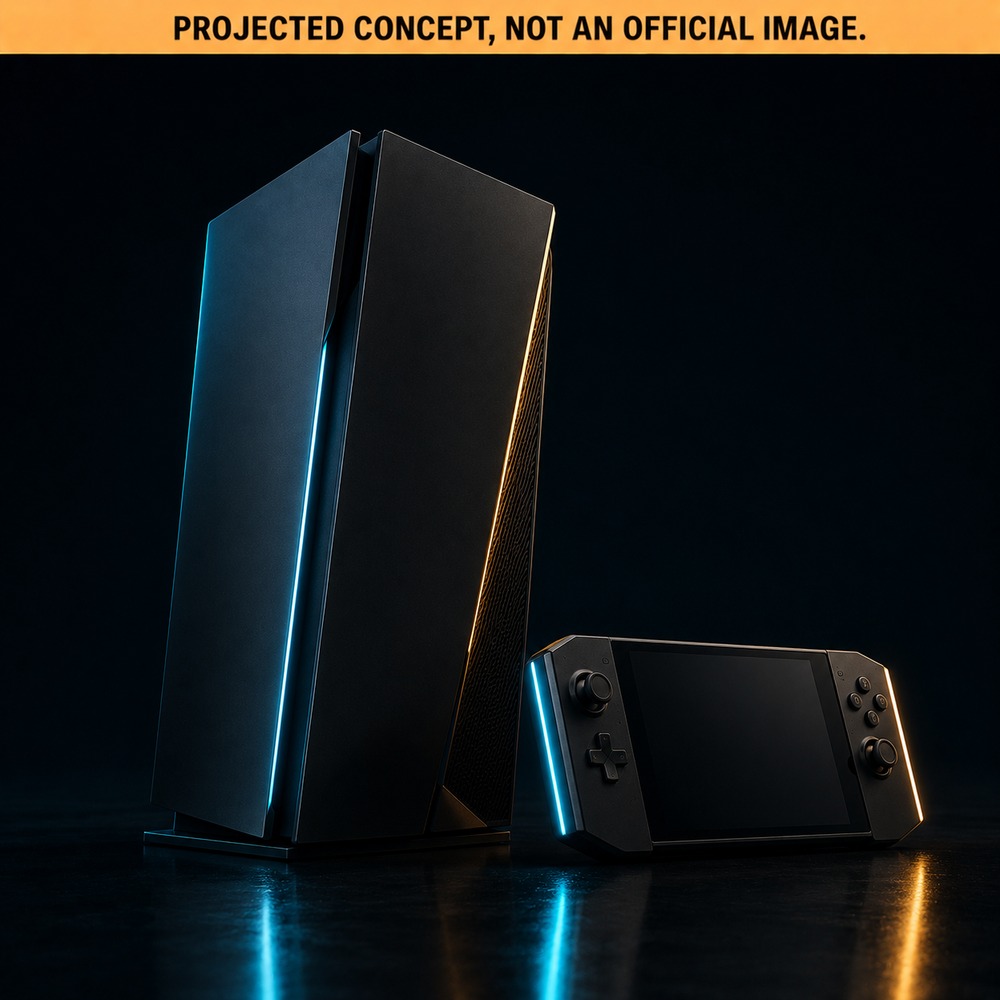
Concept art, not an official photo: Sony PlayStation 6 and Possible Handheld Concept art, not an official photo
Independent PS6 concept by designer Darko Markovic, via Yanko Design →
#10
Gaming

Sony PlayStation 6 and Possible Handheld

A console-plus-handheld strategy could blur the line between living-room and portable PlayStation while pressuring Xbox, Nintendo, and SteamOS handhelds. Machine-learning upscaling and backward compatibility may matter more than a raw performance number -- and pricing is the real fight, since advanced nodes and GDDR7 make a traditional $499 target increasingly hard.

Known
  • Sony has not announced PS6, a name, launch window, handheld, price, or specs.
  • Sony and AMD have publicly discussed Project Amethyst machine-learning graphics research -- that is not a PS6 spec sheet.
Rumor / leak
  • A production leak points to Foxconn capacity reserved for May 2027 and a fall 2027 launch; other analysts read Sony's disc-manufacturing plans as pointing to 2028.
  • Repeated “Orion” leaks describe a Zen 6-class CPU, next-gen Radeon GPU, and 30 GB GDDR7 -- none verified.
  • A “Canis” handheld with PS5/PS6 compatibility is single-source leak territory.
Our projection

A 2027 reveal is plausible; retail launch could still land in 2028. A handheld may appear earlier as a bridge product, or never ship if it misses Sony's cost target.

Nothing on this page is available to buy yet, so none of it carries an affiliate link. Where a launch connects to something we've already reviewed, we've said so and linked it. Timing, pricing, and specs here reflect the best public reporting as of publication and will change as these products get closer to release. Full disclosure.