
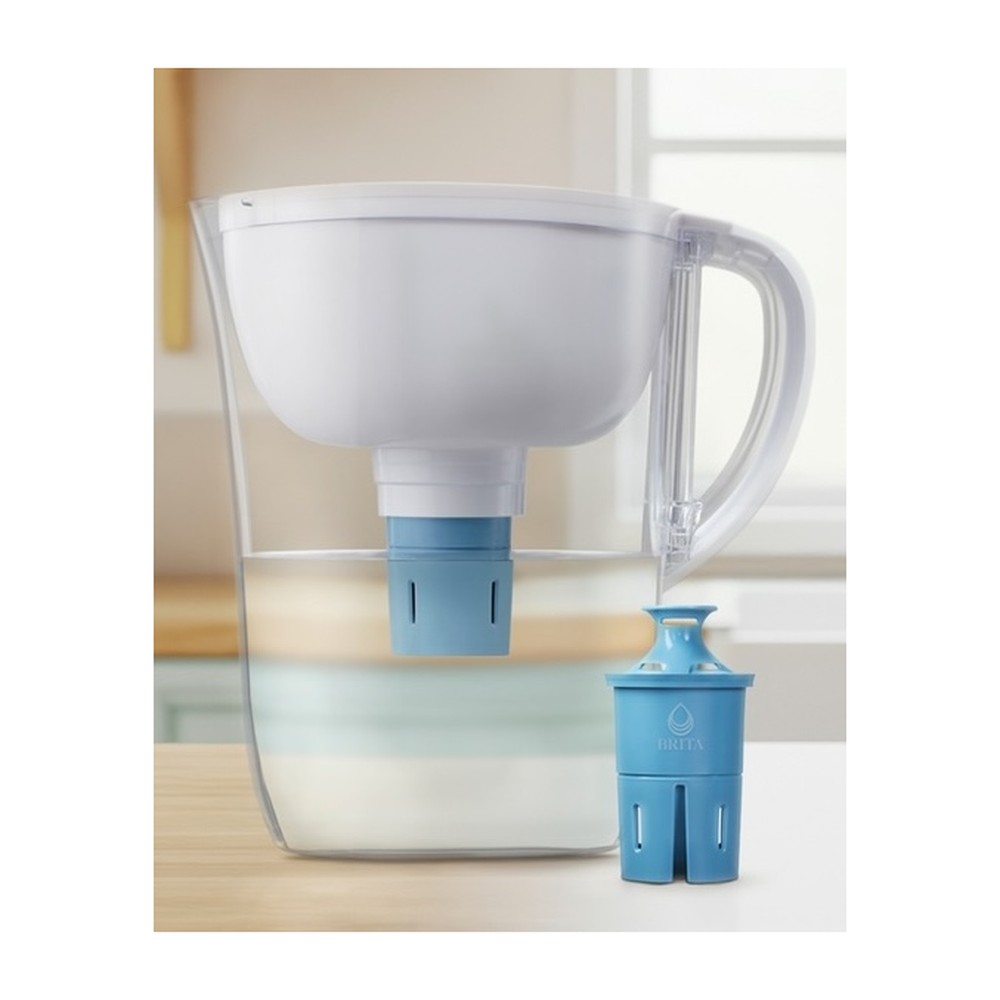
Why this made the list
Not everyone needs, or can install, a whole-house or under-sink filtration system. The Brita pitcher is the entry point most people already know: fill it from the tap, let gravity do the work, keep it in the fridge. It's cheap, it needs no installation, and it's the filter most Americans have actually used at some point.
What it actually does
It's a gravity-fed pitcher filter that reduces chlorine taste and odor and is certified to NSF/ANSI Standard 53 for mercury reduction. That's a narrower list than people tend to assume. The standard Brita filter is not certified to remove lead, PFAS ("forever chemicals"), pharmaceuticals, pesticides, arsenic, fluoride, microplastics, or bacteria. If your household is specifically worried about lead in old plumbing or PFAS contamination, this pitcher isn't the tool for that job, you'd want a filter certified against NSF/ANSI Standard 42 and 53 for those specific contaminants, which the Elite tier from Brita and some competing pitchers offer. What this pitcher is good at is making tap water taste noticeably better and cutting chlorine smell, for very little money and zero setup.
Who this is actually for
Anyone whose water is safe by municipal testing but tastes or smells like chlorine, and who wants a cheap, no-install way to make it more pleasant to drink. It's also a reasonable starter filter for renters or anyone not ready to commit to a bigger system.
What to weigh before buying
- It does not remove lead. If lead in your water is a real concern (older homes, older plumbing), this pitcher is the wrong tool, look at a filter specifically certified for lead reduction instead.
- It does not address PFAS, pharmaceuticals, or most other contaminants people are increasingly concerned about. Its certified claims are mercury reduction and chlorine taste/odor, full stop.
- Filters need regular replacement to keep working, and letting a filter sit past its rated life can actually make water quality worse, not better.
- It's slower than a tap-mounted or under-sink system since it filters in small batches by gravity, fine for daily drinking water, less practical if you're filling large volumes at once.
The verdict
A cheap, no-install way to improve the taste of tap water that's already safe. It's not a serious contaminant-removal system, know that going in and check what you actually need filtered before assuming this covers it.