
Why this made the list
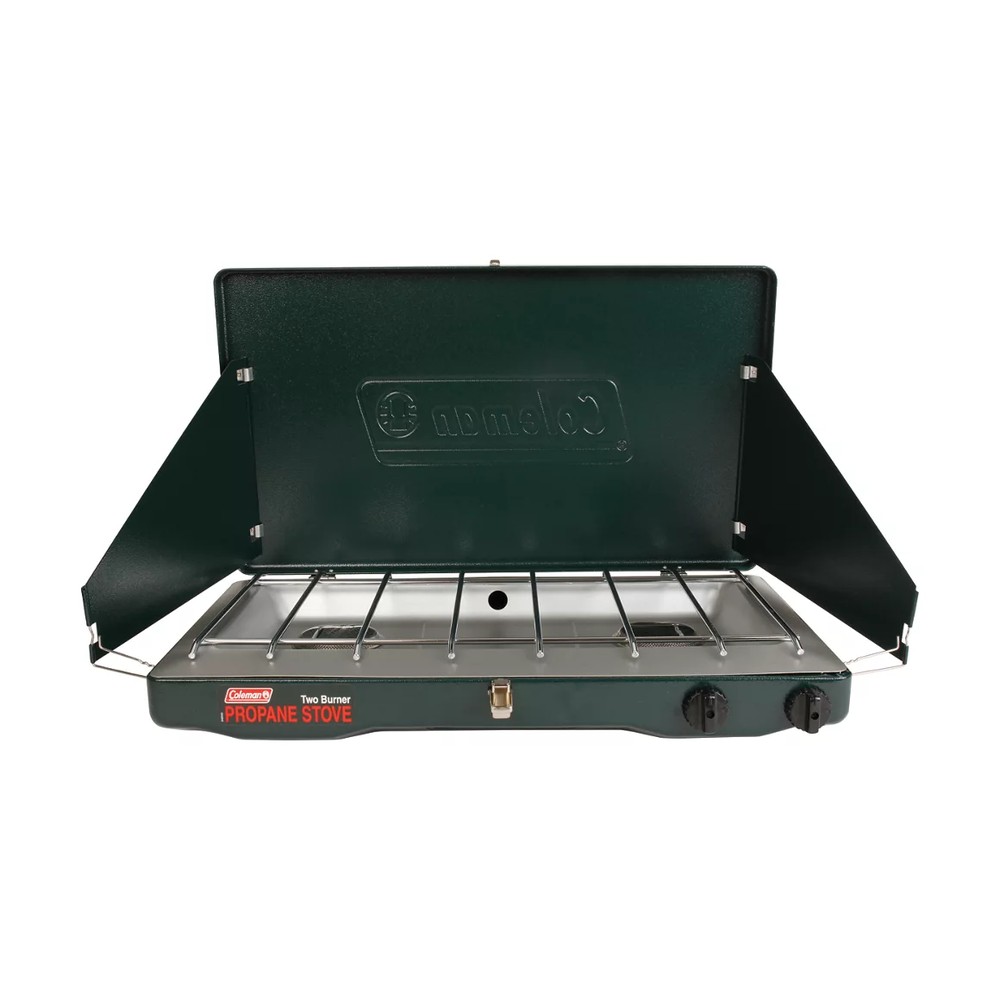
This is the camp stove most people already picture when they think "camp stove," and there's a reason it's stayed on shelves this long. It's simple, it's cheap relative to what it does, and parts and fuel for it are sold at basically every gas station and big box store in the country.
What it actually does
Two burners putting out 10,000 BTUs each, 20,000 total, with a flip-up windscreen lid and hinged side panels that block crosswinds up to around 10-15 mph. Boil time on a liter of water runs around four to four and a half minutes in calm conditions, slower than pricier stoves but perfectly fine for actual cooking. It runs on standard propane canisters and works reliably down to well below freezing, since propane doesn't stop vaporizing until deep negative temperatures.
Who this is actually for
Anyone who wants a dependable, no-surprises camp stove without paying for features they won't use. It's the right call for car campers, tailgaters, and backup kitchen setups where "it just works every time" matters more than precise simmer control.
What to weigh before buying
- Simmer control is genuinely weak. The knobs don't dial down smoothly, so anything that needs a true low, steady flame is harder to manage than on stoves built for it.
- The pressure regulator is the one part that can fail, and it's a single point of failure with no backup if the threads get damaged.
- It's bulkier than single-burner stoves, so it's not the pick if pack space or weight is the priority.
- Like any propane stove, it can't be run indoors or in an enclosed space because of carbon monoxide.
The verdict
Not the most powerful or precise stove out there, but it's reliable, it's everywhere, and it's backed by a 5-year warranty that Coleman actually honors. For straightforward camp cooking without spending Camp Chef money, this is still the default for a reason.