
Why this made the list
This is the size where a power station stops being a phone charger and starts being something you'd actually run a weekend off-grid trip on. At roughly 1,070Wh and about 24 pounds, it's the middle tier in Jackery's lineup: bigger than the 300 Plus, lighter and cheaper than the 2,000-class units.
What it actually does
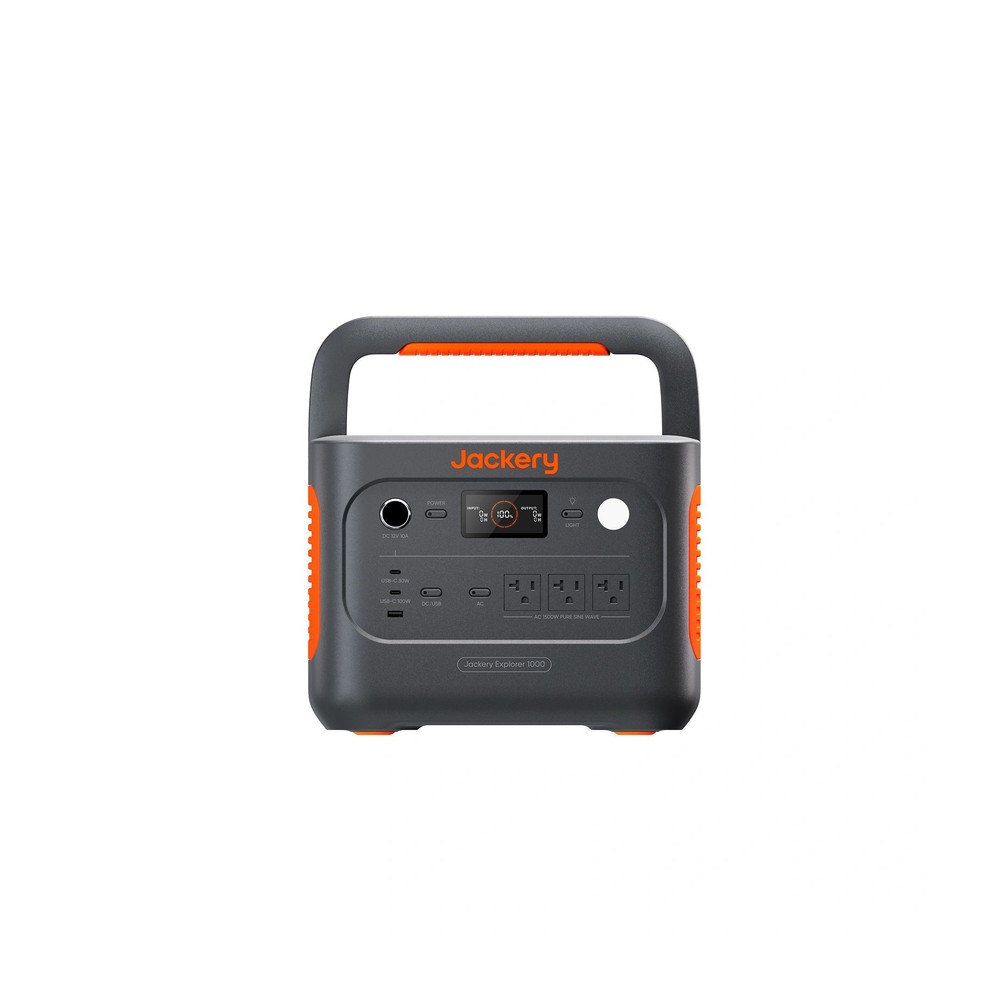
It stores around 1,070Wh and outputs up to 1,500W continuous (with a 3,000W surge rating) across three AC outlets, USB-A, two USB-C ports, and a car outlet. That's enough to run a mini fridge for a day, keep a laptop and phone charged for a week, or handle most of what a weekend campsite or a multi-day power outage throws at it. Reviewers who've tested it describe it as compact for its capacity and quiet even at full output. AC recharge is fast, reportedly under two hours from empty, though solar input is capped at 400W, which is lower than some competitors in this size class and means a full solar recharge takes longer if you're relying on panels instead of a wall outlet.
Who this is actually for
Someone planning actual weekend camping trips, not just car-camping with an outlet nearby, or someone who wants a mid-size backup for the essentials during a multi-day outage: a fridge, some lights, phone and laptop charging. It's not sized for running a whole house.
What to weigh before buying
- Solar input tops out at 400W, noticeably lower than some competitors at this capacity, so a full solar recharge takes longer if you're not near a wall outlet.
- Only three AC outlets, and reviewers note they're spaced tightly, which can matter if you're using bulkier power adapters.
- It's a genuine investment at this tier, and some reviewers have flagged that competing 1,000Wh-class stations offer more capacity or faster charging for similar money, so it's worth comparing before buying on brand recognition alone.
- At 24-plus pounds it's portable but not pocketable, plan on carrying it by the handle, not tossing it in a daypack.
The verdict
A capable, quiet mid-size power station that covers most weekend-trip and short-outage needs without the bulk or price of the largest units. The slower solar charging and tight port spacing are real trade-offs, but the core job, storing and delivering usable power, is well covered.