
Why this made the list
This is the filter people mention when they talk about gear that outlasts everything around it. It's been in production for decades largely unchanged, and it's genuinely common to find people still running the same unit they bought twenty years ago.
What it actually does
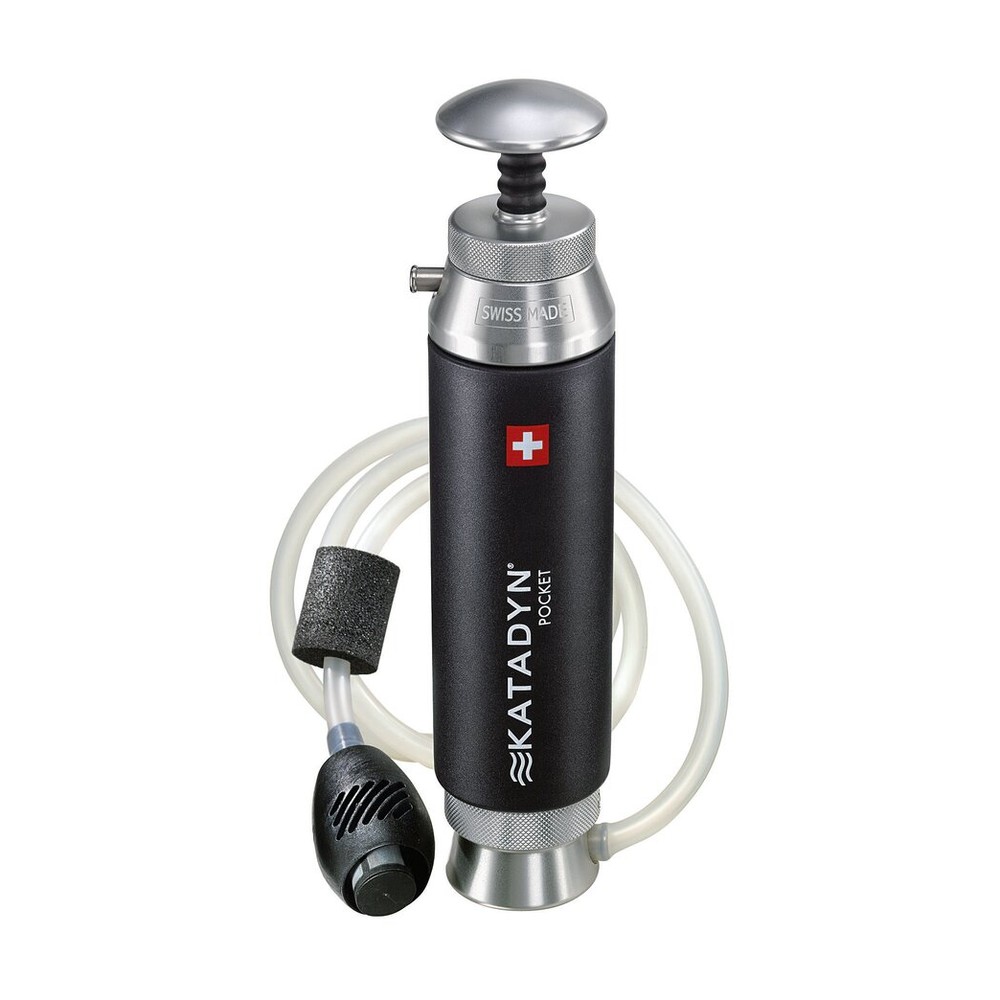
It's a hand-pump filter built around a silver-impregnated ceramic element rated at 0.2 microns, housed in a stainless steel body. Rated lifetime capacity is around 50,000 liters, an order of magnitude beyond most backpacking filters, and unlike hollow-fiber filters, the ceramic element can be field-cleaned by unscrewing the housing and scrubbing it with an included pad, restoring flow instead of replacing the filter. Flow rate is around 1 liter per minute with modest pumping effort. The whole kit weighs about 20 ounces, noticeably heavier and bulkier than squeeze or straw filters, closer to carrying a full water bottle's worth of extra weight and space. It filters bacteria, protozoa, and sediment, but like most filters in this category, not viruses.
Who this is actually for
People who prioritize long-term reliability over minimizing pack weight, expedition trips, horse packing, base camps, or anyone who wants one filter to last them decades rather than a season. It's a poor fit for ultralight backpacking where every ounce matters.
What to weigh before buying
- This is one of the more expensive filters in this category, a real investment compared to squeeze or straw filters that cost a fraction as much.
- At around 20 ounces it's the heaviest, bulkiest option here, a real tradeoff if pack weight matters for your trip.
- Initial assembly and pump priming has a learning curve, several reviewers note the setup isn't intuitive without checking instructions first.
- Like nearly every filter at this price point, it does not remove viruses, so it's not a fit for water sources with that specific risk.
The verdict
A genuinely built-to-last filter for people who value decades of reliability over minimal pack weight. It's expensive and heavy compared to lighter alternatives, but the field-cleanable ceramic element and steel construction are why this is the filter people still carry long after cheaper ones have been replaced.